Latest from Personal Mini Storage
Blog Posts
Florida's high humidity — which averages around 74% year-round and often tops 90% on summer mornings — does real storage unit damage over time. Moisture in the air causes wood furniture to warp and crack, corrodes and short-circuits electronics through condensation, and leaves clothing and upholstery prone to mildew and musty odors. Climate-controlled storage, which holds humidity at a steady, lower level, is the most reliable way to prevent this damage in Central Florida.
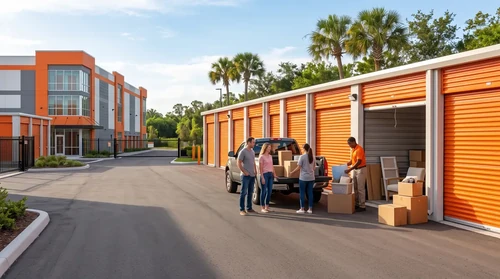
Climate-controlled storage keeps a unit at a steady temperature and humidity, protecting sensitive items like wood furniture, electronics, photos, and clothing — which matters a lot in Florida's heat and moisture. Drive-up storage lets you pull a vehicle right up to the door for fast, easy loading, and costs less, making it ideal for tools, patio furniture, and other items that aren't damaged by heat. The right choice depends on what you're storing and for how long.
A 10x10 storage unit (100 sq ft) holds about a two-bedroom apartment. A 10x15 unit (150 sq ft) fits a three-bedroom home. A 10x20 unit (200 sq ft) holds a full house of furniture or a standard car. All three are 10 feet wide and around 8 feet tall — the difference is how far back the unit goes, which is why each size up adds roughly the contents of one more room.
The storage unit size you need depends on how much you're storing. As a quick rule: a 5x5 holds a closet's worth of boxes, a 5x10 fits one room, a 10x10 holds a two-bedroom apartment, a 10x15 fits a three-bedroom home, and a 10x20 holds a full house or a vehicle. When you're between sizes, size up — a little extra room makes loading and access far easier.