Climate-Controlled vs. Drive-Up Storage: Which One Actually Protects Your Belongings?
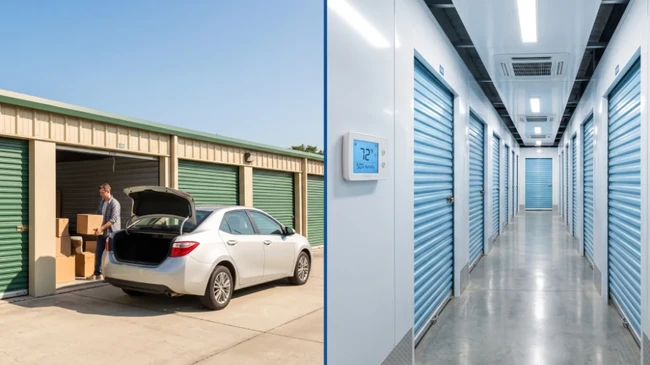
Climate-controlled storage keeps a unit at a steady temperature and humidity, protecting sensitive items like wood furniture, electronics, photos, and clothing — which matters a lot in Florida's heat and moisture. Drive-up storage lets you pull a vehicle right up to the door for fast, easy loading, and costs less, making it ideal for tools, patio furniture, and other items that aren't damaged by heat. The right choice depends on what you're storing and for how long.
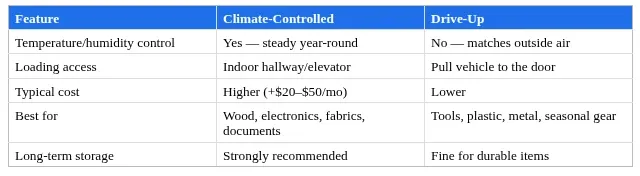
Climate-Controlled vs. Drive-Up: Side by Side
What Climate Control Actually Protects Against
In Central Florida, summer temperatures inside an uncooled unit can climb past 100°F, with humidity often above 70%. That combination is hard on certain materials:
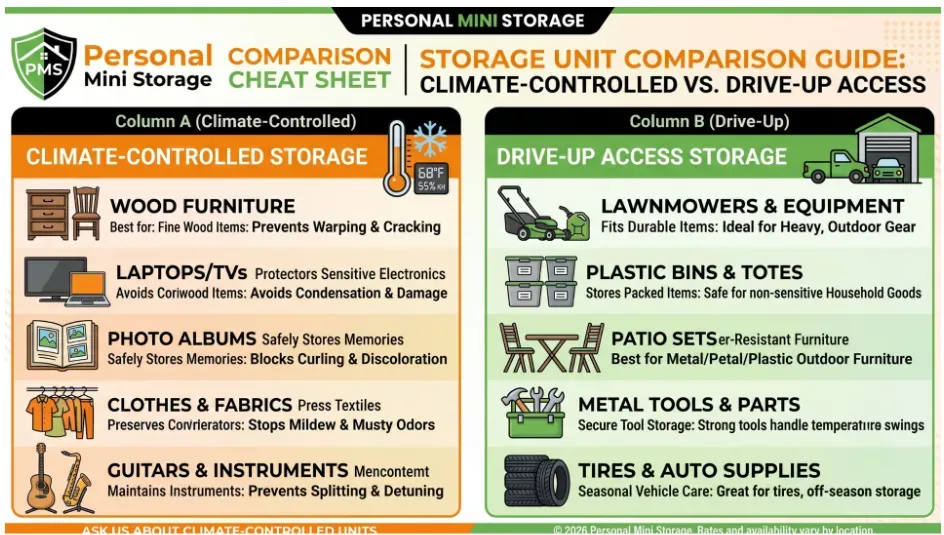
- Wood furniture can warp, crack, or split as it absorbs and releases moisture.
- Electronics can suffer condensation damage to internal components.
- Photos, documents, and artwork can curl, stick together, or grow mold.
- Clothing, upholstery, and leather can mildew or develop a musty smell.
- Musical instruments and vinyl records can distort in the heat.
Climate-controlled units hold conditions steady, so these items come out the way they went in — even after months in storage.
When Drive-Up Storage Is the Smarter Choice
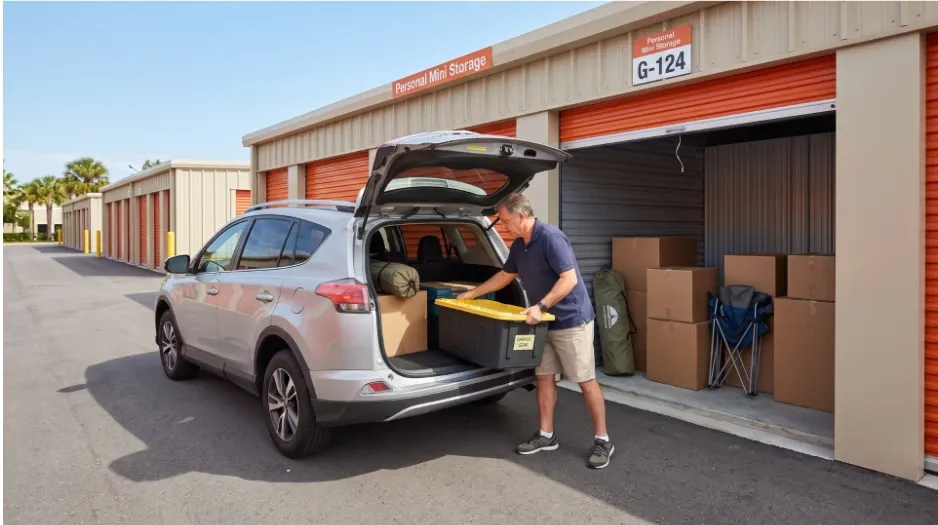
Drive-up units aren't a downgrade — for the right belongings, they're the better value. Choose drive-up when you're storing:
- Tools, hardware, and lawn or garden equipment
- Patio and outdoor furniture built to handle weather
- Plastic bins, metal shelving, and automotive parts
- Items you'll access often, where drive-to-the-door convenience saves time
You also save money, and the drive-up access makes loading heavy or bulky items much faster than carrying them down a hallway.
How to Decide
Ask two questions: What am I storing, and how long? If the answer includes anything wood, electronic, fabric, or paper — and especially if it's staying more than a few weeks through a Florida summer — climate control is worth the extra cost. If you're storing durable, weather-tolerant items for the short term, drive-up gives you convenience and savings.
"The biggest mistake we see is storing a nice wood bedroom set or a flat-screen TV in a non-climate unit through July and August. Florida's humidity does the damage slowly, and people don't notice until they move out." - Personal Mini Storage team
Compare climate-controlled and drive-up units — and current rates — at your nearest Personal Mini Storage location across Central Florida.
Frequently Asked Questions
Is climate-controlled storage worth it in Florida?
Yes, for sensitive items. Florida's heat and humidity can warp wood, damage electronics, and cause mildew on fabrics. For anything wood, electronic, paper, or fabric stored more than a few weeks, climate control is worth the extra $20–$50 per month. Durable items like tools and patio furniture are fine in a drive-up unit.
What is the difference between climate-controlled and drive-up storage?
Climate-controlled units are kept at a steady temperature and humidity and accessed through an indoor hallway, protecting sensitive belongings. Drive-up units let you pull a vehicle right to the door for easy loading and cost less, but they aren't temperature-controlled.
What should not be stored in a non-climate-controlled unit?
Avoid storing wood or leather furniture, electronics, photos, documents, artwork, musical instruments, and clothing in a non-climate unit for long periods in Florida. Heat and humidity can cause warping, condensation, and mildew.
Does drive-up storage cost less than climate-controlled?
Yes. Drive-up units typically cost $20–$50 less per month than comparable climate-controlled units, which makes them a good value for durable, weather-tolerant items.
Why Choose PMS · Location pages