
Florida Humidity and Your Storage Unit: What It Actually Does to Furniture, Electronics, and Clothing
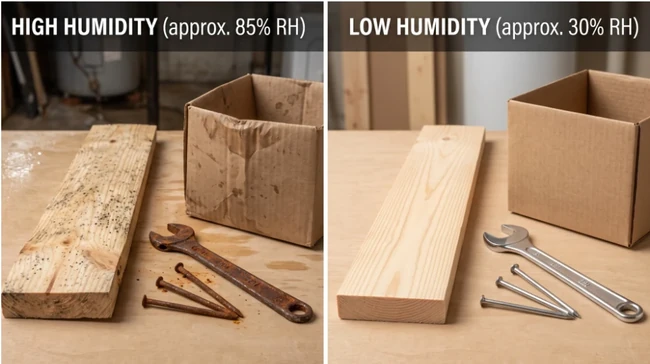
Florida's high humidity — which averages around 74% year-round and often tops 90% on summer mornings — does real storage unit damage over time. Moisture in the air causes wood furniture to warp and crack, corrodes and short-circuits electronics through condensation, and leaves clothing and upholstery prone to mildew and musty odors. Climate-controlled storage, which holds humidity at a steady, lower level, is the most reliable way to prevent this damage in Central Florida.
Here's what humidity does to each type of item, and how to protect what you store.
Why Florida Humidity Is Tough on Storage
Central Florida sits in a humid subtropical climate. Relative humidity commonly ranges from the mid-60s in drier months to well above 90% during the summer rainy season. Inside an uncooled storage unit, that moisture-laden air moves in and out with the daily temperature swing, and the repeated cycle is what causes cumulative damage over weeks and months.
"Humidity damage isn't dramatic — it's gradual. Wood absorbs moisture and swells during the day, dries and contracts at night, and after a Florida summer of that cycle a solid dresser can develop cracked joints or a warped top." - Personal Mini Storage team
What Humidity Does to Furniture
Wood is hygroscopic, meaning it absorbs and releases moisture from the air. In a humid unit, wood furniture can:
- Warp, swell, or crack at joints and along tabletops
- Develop a white haze or bloom on finished surfaces
- Loosen at glued joints as adhesives weaken
- Grow mold or mildew on unfinished surfaces and undersides
Leather furniture is also vulnerable — it can absorb moisture, stiffen, and develop mildew spots that are difficult to remove.
What Humidity Does to Electronics
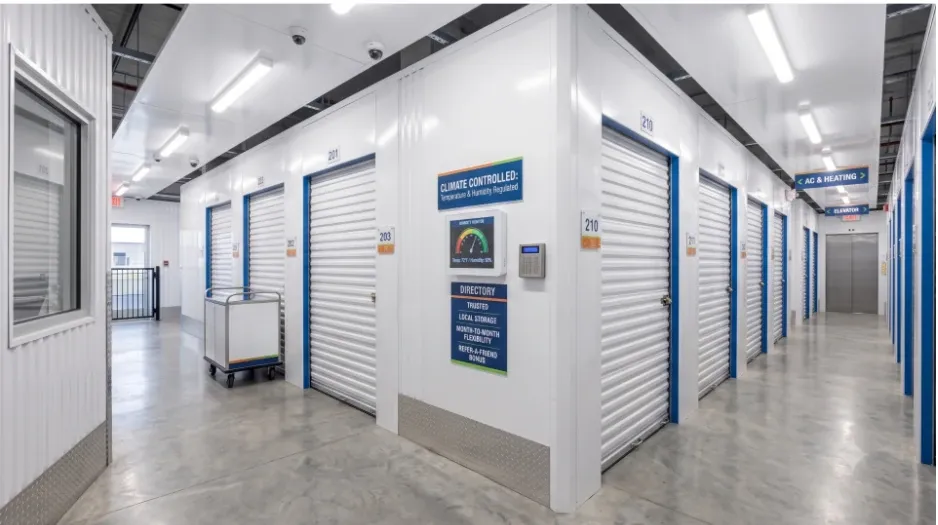
Electronics are especially sensitive because moisture reaches internal components. In a humid, uncooled unit, condensation can form as temperatures swing, leading to:
- Corrosion on circuit boards, connectors, and battery contacts
- Short circuits when the device is powered on after storage
- Fogging or moisture behind camera lenses and screens
- Degraded performance in TVs, computers, speakers, and appliances
What Humidity Does to Clothing and Fabric
Textiles trap moisture and provide a surface for mold spores to grow. Over a humid Florida summer, stored clothing, linens, and upholstery can:
- Develop mildew stains and a persistent musty smell
- Weaken and discolor along folds and seams
- Attract pests drawn to damp fibers
How to Protect Your Belongings
- Choose a climate-controlled unit — the single most effective step, since it holds humidity steady and low.
- Use moisture absorbers — silica gel packs or desiccant tubs inside boxes and cabinets.
- Avoid plastic bags directly on wood or leather — they trap condensation; use breathable covers instead.
- Clean and fully dry everything before storing — residual moisture accelerates mildew.
- Elevate boxes off the floor on pallets or shelving for airflow.
- Leave gaps for air to circulate rather than packing items tight against walls.
Storing furniture, electronics, or clothing through a Florida summer? Ask about climate-controlled units at your nearest Personal Mini Storage location and keep humidity out of the equation.
Frequently Asked Questions
Does humidity damage furniture in storage?
Yes. In Florida's humidity, wood furniture can warp, crack, and grow mildew as it absorbs and releases moisture from the air. Leather can stiffen and develop mildew spots. A climate-controlled unit prevents this by keeping humidity steady and low.
Can I store electronics in a non-climate-controlled unit in Florida?
It's risky. Florida humidity and temperature swings can cause condensation inside electronics, leading to corrosion and short circuits. For TVs, computers, and appliances, a climate-controlled unit is strongly recommended.
How do I keep moisture out of my storage unit?
Use a climate-controlled unit, place silica gel or desiccant moisture absorbers inside boxes, elevate items off the floor, clean and dry everything before storing, and leave space for air to circulate. Avoid sealing wood or leather in plastic bags.
What humidity level is safe for storage?
A relative humidity of roughly 30–50% is considered safe for storing furniture, electronics, and clothing. Central Florida's outdoor humidity averages around 74%, which is why climate-controlled storage matters here.
Climate-controlled feature · FAQ