Business Storage Solutions: How Self-Storage Can Help You Stay Organized
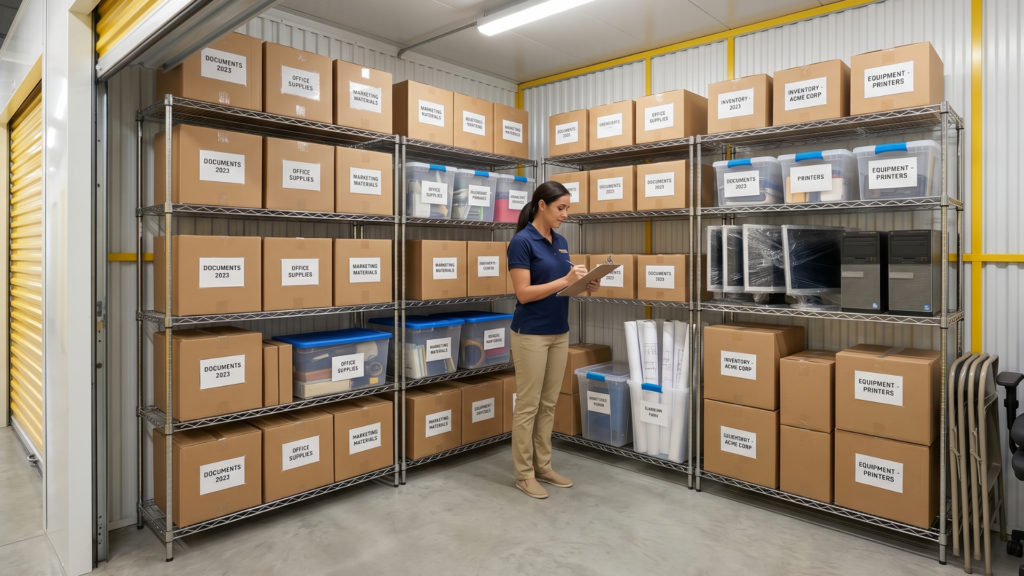
Running a business takes space. Sometimes, a lot more space than you expected.
Inventory starts piling up. Office supplies take over the breakroom. Tools end up scattered between job sites. Seasonal displays, old files, packaging materials, equipment, and extra furniture slowly creep into every available corner.
Before you know it, your workspace feels less like a business and more like a storage closet with a Wi-Fi connection.
That is where business storage solutions can make a big difference. Self-storage gives business owners a flexible and affordable way to stay organized without needing to rent a bigger office, warehouse, or commercial space.
Whether you run a retail shop, online store, contracting business, service company, or local office, the right storage unit can help you free up space, protect important items, and keep your daily operations running smoothly.
Why Businesses Need Extra Storage Space
Every business collects things over time. Some of it is necessary. Some of it is seasonal. Some of it is useful, but not every single day.
The problem starts when these items begin taking over the areas where your team should be working, serving customers, or managing operations.
Common reasons businesses need extra storage include:
- Seasonal inventory
- Extra supplies
- Business records and files
- Tools and equipment
- Office furniture
- Marketing materials
- Event displays
- Packaging supplies
- Contractor materials
- Overflow products
- Business vehicles or trailers

When your workspace becomes too crowded, productivity can suffer. Employees waste time looking for items. Customers may see clutter. Important supplies can get misplaced. Even simple daily tasks become harder than they need to be.
A storage unit helps solve that problem by giving your business a dedicated place for the items you need, but do not always need right in front of you.
What Are Business Storage Solutions?
Business storage solutions are storage options that help companies organize and manage items outside their main workspace. Instead of letting inventory, equipment, documents, or supplies take over your office, home, garage, or storefront, you can keep them in a secure and accessible storage unit.
For many small businesses, self-storage is a practical alternative to renting a larger commercial property. A bigger office or warehouse often comes with higher rent, utilities, insurance, and long-term commitments. Self-storage gives you room to grow without making a major financial jump.
Businesses commonly use self-storage for:
- Product inventory
- Office furniture
- Business documents
- Tools and equipment
- Event materials
- Seasonal displays
- Contractor supplies
- Shipping and packaging materials
- Trade show items
- Extra fixtures
- Non-perishable business supplies
It is a simple way to get more room without overcomplicating your business operations.
How Self-Storage Helps Businesses Stay Organized
Self-storage is not just about having extra space. It is about creating a better system.
When your business items have a dedicated place, it becomes easier to find what you need, manage inventory, protect supplies, and keep your main workspace focused on daily operations.
1. It Keeps Your Workspace Clean and Functional
Your office, shop, or work area should help you get things done. It should not feel like an obstacle course of boxes, tools, and random “we might need this later” items.
By moving extra items into storage, you can make your main workspace easier to use. This is especially helpful for businesses with limited square footage.
For example, you can store:
- Extra chairs and desks
- Backup supplies
- Old but important documents
- Holiday displays
- Promotional materials
- Inventory overflow
- Tools used only for specific jobs
A cleaner workspace can help your team move faster, stay focused, and make a better impression on customers.
2. It Makes Inventory Easier to Manage
If you sell products, inventory can quickly become one of your biggest space problems.
Retailers, online sellers, and local shops often need extra room for products, packaging, shipping materials, and seasonal stock. Keeping all of that in a cramped office, spare room, or storefront can become stressful.
A storage unit allows you to organize inventory by:
- Product type
- Season
- Supplier
- Popularity
- Order frequency
- Business category
You can place fast-moving items near the front and keep slower-moving or seasonal products toward the back. Add shelves, clear labels, and a basic inventory list, and your storage unit can become an extension of your business operations.
No more digging through five boxes just to find the one product your customer ordered yesterday.
3. It Gives Contractors and Service Businesses a Central Hub
Contractors, landscapers, cleaners, plumbers, electricians, handymen, and other service-based businesses often deal with tools, equipment, materials, and supplies that are difficult to store at home or in a small office.
A storage unit can serve as a central hub where business owners and team members can access what they need before heading to a job.
This can be useful for storing:
- Ladders
- Power tools
- Cleaning supplies
- Landscaping equipment
- Job materials
- Safety gear
- Extra parts
- Worksite supplies
- Marketing signs
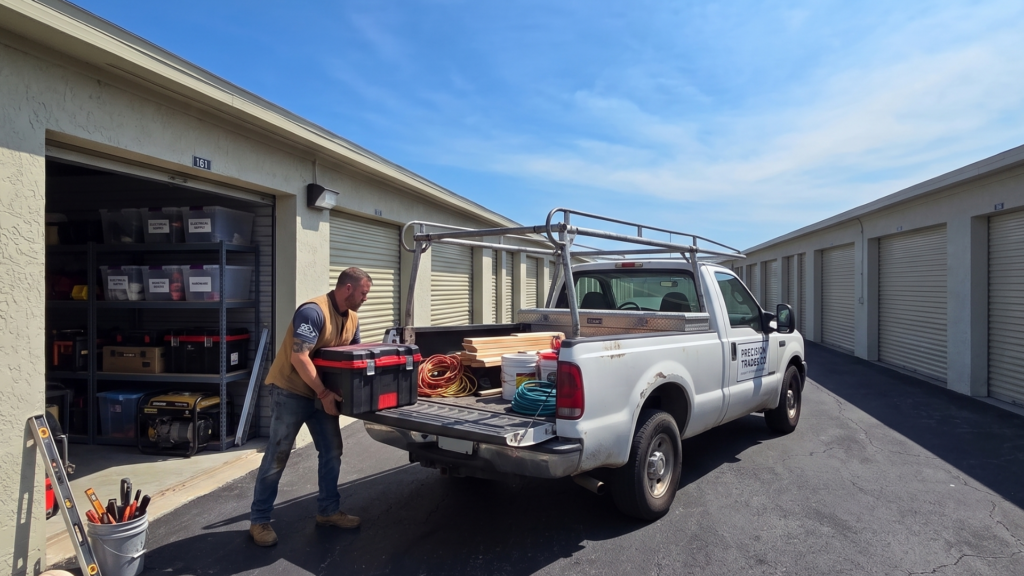
Drive-up storage units are especially helpful because they make loading and unloading easier. Instead of carrying heavy items through hallways or elevators, you can pull up, load what you need, and get moving.
For busy businesses, that convenience matters.
4. It Helps With Seasonal Business Needs
Many businesses do not need the same amount of space all year.
Retail shops may need extra room during the holidays. Landscapers may need different equipment depending on the season. Event businesses may need storage for décor, displays, tents, signage, and supplies. Offices may need temporary space during renovations or transitions.
Self-storage gives your business room to adjust as your needs change.
You can use it for:
- Holiday inventory
- Seasonal decorations
- Event materials
- Summer equipment
- Winter supplies
- Promotional displays
- Temporary overflow
- Renovation storage
Instead of letting seasonal items take over your workspace for months, you can keep them organized and ready until you need them again.
5. It Can Reduce the Need for a Bigger Commercial Space
Moving into a larger office, shop, or warehouse may sound like the obvious solution when your business starts running out of room. But bigger commercial space usually means bigger costs.
You may have to deal with:
- Higher monthly rent
- Longer lease terms
- Increased utility bills
- More maintenance
- Extra insurance costs
- Higher overhead
Self-storage can be a more flexible option, especially if your business only needs extra space for specific items or certain times of the year.
It gives you the space you need without forcing you into a bigger commitment before your business is ready.
Types of Businesses That Can Benefit From Self-Storage
Almost any business that uses physical items can benefit from self-storage. Here are some common examples.
Retail Businesses
Retailers can use storage units for extra inventory, seasonal displays, signage, mannequins, fixtures, packaging materials, and promotional items.
This helps keep the sales floor clean and customer-friendly while still giving you access to backup stock when needed.
eCommerce Sellers
Online sellers often start from home, but inventory can quickly outgrow a spare room, closet, or garage.
A storage unit can help eCommerce businesses organize products, boxes, shipping supplies, returns, and promotional materials in one dedicated place.
Contractors and Trades
Contractors can use self-storage for tools, materials, equipment, ladders, and job-site supplies. This keeps expensive tools out of the garage and gives the business a central place to prepare for each project.
Real Estate Agents and Home Stagers
Real estate professionals can use storage for signs, staging furniture, open house supplies, printed materials, and seasonal décor.
This helps keep staging items organized between listings.
Restaurants and Cafés
Restaurants, cafés, and food-service businesses may use storage for extra furniture, seasonal decorations, event supplies, non-perishable items, or backup equipment.
Just remember that perishable food and temperature-sensitive items may not be suitable for standard storage.
Offices and Professional Services
Offices can use self-storage for records, archived files, extra desks, chairs, technology, promotional materials, and supplies.
This is especially useful during office moves, remodels, downsizing, or expansion.
Event and Marketing Businesses
Event planners, marketing teams, and promotional companies often need space for banners, booths, tents, signs, displays, décor, and branded materials.
A storage unit helps keep those items organized and ready for the next event.
Choosing the Right Storage Unit for Your Business
The best storage unit depends on what your business needs to store, how often you need access, and how much space you need.
Consider What You Are Storing
Start by making a list of the items you plan to store. This will help you choose the right unit size and storage type.
Ask yourself:
- Are the items heavy or bulky?
- Will you need access every week?
- Are the items sensitive to heat?
- Do you need shelves?
- Will you be storing tools, documents, furniture, or inventory?
- Do you need space to walk inside the unit?
A little planning can save you from renting a unit that is too small or paying for space you do not need.
Choose Between Drive-Up and Air-Conditioned Storage

Different business items need different storage conditions.
Drive-up storage is a good option for businesses that need frequent access or need to load and unload heavy items. This is useful for contractors, service providers, retailers, and businesses storing equipment or supplies.
Air-conditioned storage is a better choice for items that may be affected by Florida heat. This can include paperwork, electronics, furniture, office supplies, and certain types of inventory.
If you are storing items that could warp, fade, melt, or become damaged in high temperatures, air-conditioned storage may be the smarter choice.
Think About Location
Location matters, especially for businesses.
A storage unit should be close enough to your office, shop, service area, or route so it does not slow down your day. If you need to visit the unit often, convenience should be a top priority.
The right location can help you save time, reduce travel, and make storage part of your normal workflow instead of another task on your already full to-do list.
Use the Right Unit Size
Choosing the right size can make your storage unit more efficient.
A smaller unit may work for boxes, files, supplies, or limited inventory. A larger unit may be needed for equipment, furniture, tools, or bulk inventory.
When in doubt, think beyond floor space. Vertical space matters too. Shelving can help you store more without creating messy stacks of boxes.
Business Storage Organization Tips
Renting a storage unit is a great first step. Organizing it properly is what makes it truly useful.
Here are some practical ways to keep your business storage unit easy to manage.
Label Everything Clearly
Every box, bin, and container should have a clear label. Include product names, dates, categories, or departments.
For example:
- Holiday inventory
- Tax records 2024
- Cleaning supplies
- Extra uniforms
- Event banners
- Fast-moving products
- Office electronics
Clear labels save time and prevent unnecessary digging.
Keep Frequently Used Items Near the Front
Place the items you use most often near the entrance of your unit. This may include tools, top-selling inventory, packing supplies, or weekly job materials.
Items you only need occasionally can go toward the back.
This simple system can make every visit faster.
Use Shelving
Shelving is one of the easiest ways to improve your storage setup.
It helps you:
- Use vertical space
- Keep boxes off the floor
- Separate categories
- Avoid crushed items
- See what you have
- Create a cleaner layout
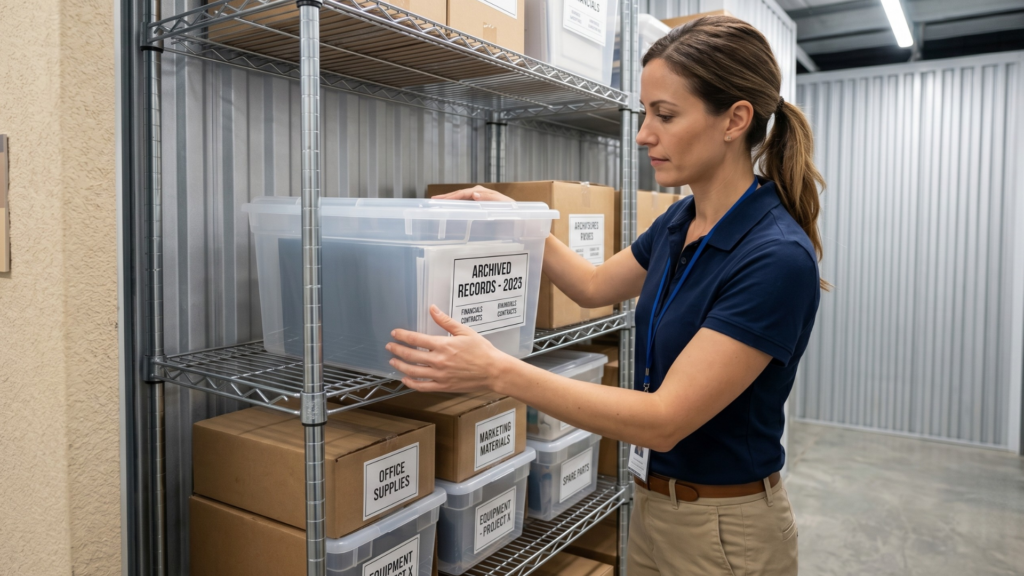
Without shelving, boxes often become tall stacks that are difficult to move and even harder to search through.
Create Zones Inside the Unit
Divide your storage unit into sections based on how your business operates.
You might create zones for:
- Inventory
- Tools
- Documents
- Returns
- Packing supplies
- Event materials
- Seasonal items
- Office equipment
This helps you know exactly where to look when you need something.
Keep a Digital Inventory List
A simple spreadsheet can make your storage unit much easier to manage.
Track details like:
- Item name
- Quantity
- Box number
- Storage location
- Date added
- Date removed
- Notes
This is especially helpful for businesses storing inventory, records, supplies, or equipment.
Leave a Walkway
Do not pack your unit wall to wall unless you rarely need access. Leave a small walkway so you can reach the back without unloading half the unit.
It may feel like you are “losing” space, but the time you save is worth it.
Review Your Unit Regularly
Business needs change. Inventory moves. Equipment gets replaced. Files become outdated.
Schedule a regular review of your storage unit every month or quarter. Remove anything you no longer need, reorganize messy areas, and update your inventory list.
Otherwise, your storage unit may slowly turn into the business version of a junk drawer.
When Should Your Business Rent a Storage Unit?
You may need business storage if:
- Your office or shop feels crowded
- You are storing business items at home
- Your team wastes time looking for supplies
- Your inventory is hard to manage
- You need space for tools or equipment
- Seasonal items are taking over your workspace
- You are paying for commercial space you do not fully need
- Your business is growing
- You want to separate personal and business items
- You need temporary space during a move or renovation
If clutter is slowing you down, extra storage can help you regain control.
Why Choose Personal Mini Storage for Business Storage?
Personal Mini Storage provides convenient storage solutions for businesses across Central Florida. Whether you need space for inventory, tools, documents, equipment, or seasonal supplies, we make it easier to find storage that fits your needs.
Business owners choose Personal Mini Storage because we offer practical features designed to make storage simple, including:
- Clean storage units
- Air-conditioned storage options
- Drive-up access at many locations
- Ground-floor units at many facilities
- Moving and packing supplies
- Truck rentals
- Flexible storage options
- Easy online rentals
- Helpful local managers
- Convenient Central Florida locations
We know business owners are busy. You do not need storage that adds more stress to your day. You need storage that is easy to access, easy to manage, and easy to work into your schedule.
That is exactly what self-storage should do.
Find Business Storage Near You
A more organized business starts with having the right space.
Whether you are managing inventory, storing equipment, clearing out office clutter, or preparing for a busy season, self-storage can help you stay organized without the cost and commitment of a larger commercial property.
Personal Mini Storage offers business storage solutions throughout Central Florida, making it easier to find a location near your office, shop, home, or service area.
Ready to clear the clutter and make your business easier to manage?
Find a Personal Mini Storage location near you and rent your storage unit online today.
Frequently Asked Questions About Business Storage Solutions
Can businesses use self-storage units?
Yes. Many businesses use self-storage units for inventory, tools, equipment, documents, office furniture, supplies, and seasonal items.
What types of businesses use storage units?
Retailers, contractors, eCommerce sellers, offices, real estate agents, landscapers, restaurants, event planners, and service businesses can all benefit from self-storage.
Is self-storage cheaper than renting a warehouse?
In many cases, self-storage can be more affordable and flexible than renting warehouse space, especially for small businesses that need extra room without a long-term commercial lease.
What can I store in a business storage unit?
You can store items such as inventory, tools, office furniture, business records, equipment, seasonal displays, marketing materials, and packing supplies. Restrictions may apply, so it is best to check with the storage facility before storing certain items.
Should I choose air-conditioned storage for business items?
Air-conditioned storage is a smart option for items that may be affected by Florida heat, such as documents, electronics, furniture, office supplies, and certain types of inventory.
Can contractors use self-storage for tools and equipment?
Yes. Contractors often use self-storage for tools, ladders, equipment, materials, and job supplies. Drive-up units can make loading and unloading easier.
How do I organize a business storage unit?
Use shelves, labels, clear zones, and a digital inventory list. Keep frequently used items near the front and leave a walkway so you can access everything easily.
Can I rent storage short-term for my business?
Yes. Self-storage is often useful for both short-term and long-term business needs, including seasonal inventory, office moves, renovations, and temporary overflow storage.