Why a Storage Unit Is the Smartest Summer Move for College Students
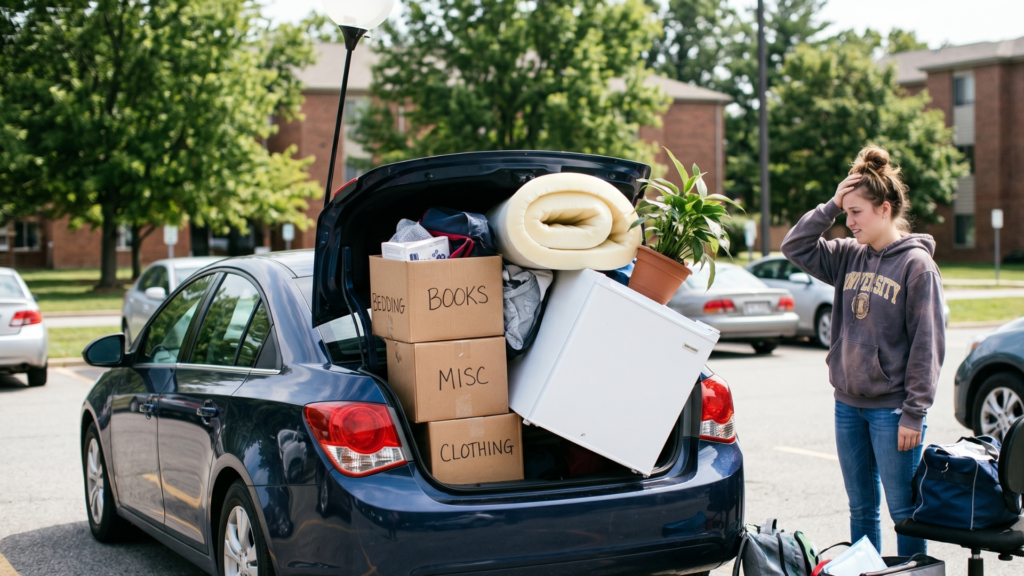
Summer break sounds relaxing until move-out week shows up with a stack of boxes, a half-packed dorm room, a mini fridge that still needs to be defrosted, and a car that suddenly feels way too small.
For many college students, the end of the semester means figuring out what to do with clothes, books, bedding, furniture, electronics, dorm supplies, and all the random things that somehow multiplied during the school year. Taking everything home may sound simple at first, but once you start packing, it can quickly turn into a stressful, expensive, and exhausting project.
That is why a storage unit can be the smartest summer move for college students.
Instead of hauling everything home, crowding the family garage, or moving the same items twice, students can store their belongings near school and pick them up when the next semester begins. It is simple, practical, and a lot easier than trying to fit your entire college life into the trunk of a sedan.
The Summer Move-Out Problem Most College Students Face
College move-out season can feel like a race against the clock. Dorms close, leases end, roommates split up, and students often need to clear out their space quickly. The problem is that not every student has a new apartment lined up right away, and not every family has the time, space, or vehicle to move everything back home.
This becomes even harder for students who attend college away from home. If home is several hours away, moving out can mean multiple car trips, a rented truck, or one very crowded drive with poor visibility and a lamp poking someone in the shoulder.
Students may need summer storage for many reasons, including:
- Dorms closing for summer break
- Apartment leases ending before the next lease begins
- Study abroad plans
- Summer internships
- Roommate changes
- Temporary housing gaps
- Limited car space
- Parents not wanting to haul furniture back and forth
A storage unit gives students a practical option during that in-between season. Belongings can stay close to school, and students can avoid transporting everything home just to bring it all back again a few months later.
Why a Storage Unit Makes Summer Break Easier
A storage unit makes summer break easier because it gives college students a convenient place to keep their belongings until school starts again.
Instead of packing everything into a car, shipping boxes home, or cluttering up a bedroom, students can place dorm essentials, books, clothing, small furniture, and appliances in storage. When the next semester begins, move-in becomes much easier because most of the heavy lifting has already stayed nearby.
A student storage unit can help with:
- Reducing move-out stress
- Avoiding extra trips home
- Saving space in the car
- Keeping belongings organized
- Making next semester’s move-in easier
- Handling housing gaps between leases
- Giving students more flexibility for travel or internships
It also helps students avoid that classic summer problem: bringing home five boxes and only opening one of them for the entire break. If you do not need it at home, it probably does not need to make the trip.
What College Students Can Store Over the Summer
College students can store almost anything they need for school, as long as it is allowed by the facility and packed properly. The best items to store are things students will need again next semester but do not want to haul home for the summer.
Dorm Furniture and Small Furniture
A storage unit is a practical place to keep small dorm furniture and apartment items that students do not want to move home every summer.
This may include:
- Mini futons
- Desk chairs
- Nightstands
- Shelving units
- Small tables
- Storage cubes
- Floor lamps
- Bedside carts
- Folding chairs
Before storing furniture, clean it and make sure it is dry. Remove loose parts when possible, such as detachable shelves, wheels, or small hardware. Keep screws and small parts in a labeled bag and tape it securely to the furniture piece.
Use sheets, furniture pads, or breathable covers to help protect furniture from dust. Place larger items toward the back of the unit if they will not be needed until move-in. Keep lighter items on top and avoid stacking heavy boxes on anything that could bend, crack, or break.
Clothes, Shoes, and Seasonal Items
Clothes, shoes, bedding, and seasonal items are some of the easiest things for students to store over the summer.
Instead of bringing home every hoodie, jacket, pair of shoes, and random costume from a themed party, students can keep items packed and ready for the next semester.
Good clothing and seasonal items to store include:
- Jackets
- Dorm clothes
- Shoes
- Sports gear
- Extra bedding
- Towels
- Costumes or event outfits
- Winter clothing
- Extra hangers
- Laundry baskets
Before storing clothes and linens, wash and dry everything completely. This is especially important in Florida, where humidity can make damp items smell musty fast. Use clear bins, labeled boxes, or wardrobe boxes for items that need to hang.
Avoid packing damp towels, dirty laundry, or shoes that have not had time to air out. Future you will not enjoy opening that box.
Books, School Supplies, and Study Materials
Textbooks and school supplies are great candidates for summer storage because they are useful during the semester but often unnecessary during summer break.
Students can store:
- Textbooks
- Binders
- Notebooks
- Lab materials
- Art supplies
- Desk organizers
- Printer paper
- School projects
- Reference books
- Extra office supplies
Use smaller boxes for books because books get heavy quickly. One giant box of textbooks may seem efficient until someone has to lift it. Label each box by subject, semester, or category so it is easier to find what you need later.
For important documents, use a plastic bin with a secure lid. However, students should keep essential personal documents with them, such as IDs, passports, financial paperwork, medical information, and anything needed during summer break.
Electronics and Dorm Appliances
Storage units can help students safely keep electronics and small dorm appliances out of crowded cars and bedrooms during summer break.
Common electronics and appliances students store include:
- Mini fridge
- Microwave
- Coffee maker
- Printer
- Monitor
- Speakers
- Gaming console
- Desk fan
- Small TV
- Lamps
- Charging cords
- Extension cords
Before storing appliances, clean them well and allow them to dry fully. A mini fridge should be unplugged, defrosted, wiped down, and left completely dry before going into storage. Do not rush this step. A wet mini fridge in a closed unit is not the surprise anyone wants in August.
For electronics, remove batteries from remotes and small devices. Wrap cords neatly and label them so you do not end up with a mystery cord collection. If you still have the original boxes for electronics, use them. If not, use sturdy boxes with padding.
Bedding, Linens, and Dorm Essentials
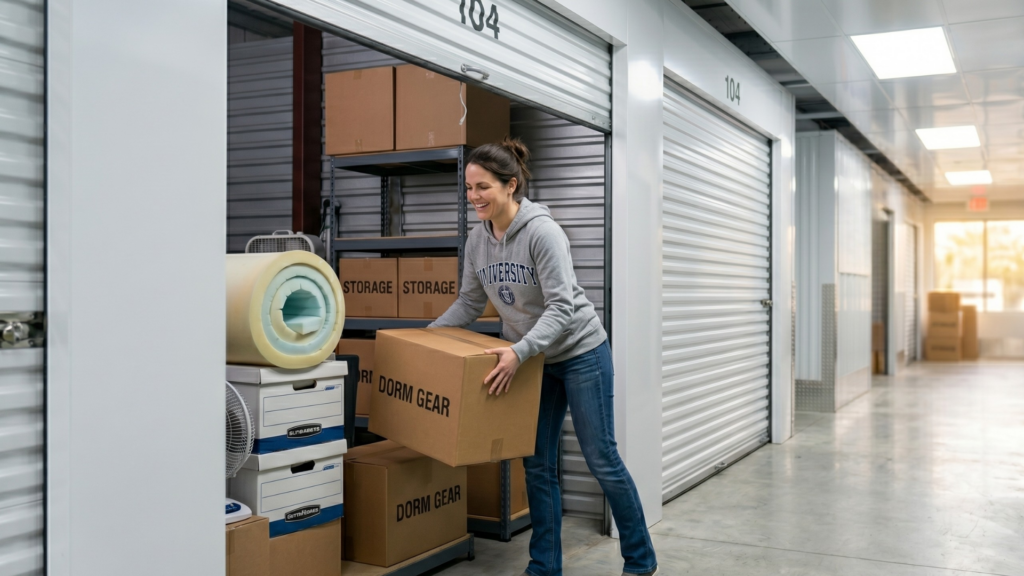
Bedding and dorm essentials are ideal for summer storage because students usually need them again as soon as the next semester starts.
Items to store may include:
- Mattress toppers
- Pillows
- Comforters
- Sheets
- Towels
- Laundry baskets
- Shower caddies
- Storage bins
- Hangers
- Bed risers
- Desk organizers
- Small rugs
Wash and dry bedding, towels, and linens before packing them away. Vacuum-seal bags can help save space, especially for bulky comforters and pillows. Label bins clearly so move-in day is easier.
Keep dorm essentials together if possible. When the next semester starts, it is much easier to grab one clearly labeled “bedding and bathroom” bin than to search through six boxes labeled “stuff.”
When Climate-Controlled Storage Makes Sense for Students

Climate-controlled storage may be a smart option for students storing items during hot and humid months, especially in Florida.
Summer heat can be hard on electronics, books, documents, clothing, bedding, furniture, and other sensitive belongings. Climate-controlled storage helps provide a more stable environment than a hot garage, attic, or non-climate-controlled space.
Students may want to consider climate-controlled storage for:
- Electronics
- Books
- Important papers
- Bedding
- Clothing
- Wood furniture
- Leather or upholstered items
- Photos
- Musical instruments
- Art supplies
- Valuable or sentimental items
For students in Florida, this can be especially helpful during the summer months. Heat, humidity, and rainy season can make storage conditions more challenging, so a climate-controlled unit may be worth it for belongings that need extra protection.
A good rule of thumb: if you would not want to leave it in a hot car or garage for weeks, consider climate-controlled storage.
Student Storage vs. Taking Everything Home
When students are deciding what to do with their belongings, the choice usually comes down to taking everything home or using a storage unit. Both options can work, but storage is often more convenient for students who will return to the same area for school.
Taking Everything Home
Taking everything home may seem like the easiest option, especially if the student lives nearby. There is no monthly storage cost, and all belongings stay with the student or family.
However, it also comes with a few downsides.
Taking everything home may mean:
- More packing
- More loading and unloading
- Less space in the car
- A crowded bedroom or garage
- Possible rental truck costs
- Moving the same items again before school starts
- More stress for parents and students
If the student lives far from campus, the cost and hassle can add up quickly.
Using a Storage Unit
A storage unit keeps belongings close to school and makes the next move-in easier. Students can store items once, enjoy summer break, and return when they are ready to move into the next dorm, apartment, or shared house.
Using student storage can help with:
- Keeping dorm items near campus
- Reducing car space problems
- Avoiding long-distance hauling
- Making move-in faster next semester
- Handling lease gaps
- Sharing storage with roommates
- Supporting internships, travel, or study abroad plans
The main thing storage requires is planning. Students should reserve early, pack properly, label everything, and make sure they choose the right unit size.
How Students Can Save Money With Shared Storage

Students can reduce storage costs by sharing a storage unit with a trusted roommate or friend.
This works especially well when several students are storing similar items, such as bedding, mini fridges, boxes, books, small furniture, and dorm supplies. Instead of each person renting a separate space, they can split the cost of one unit.
To make shared storage work, students should:
- Share only with someone reliable
- Label every box clearly
- Create separate areas inside the unit
- Keep a shared inventory
- Agree on who has access
- Decide move-in and move-out dates
- Discuss payment before renting
- Avoid mixing unlabeled items together
Shared storage can be a smart way to save money, but only if everyone is clear about expectations. A little organization can prevent a lot of “wait, is this your microwave or mine?” confusion later.
How to Choose the Right Storage Unit Size for College Students
Most college students only need a small storage unit for summer, but the right size depends on how much they plan to store.
A student storing only boxes, clothes, books, bedding, and a few dorm supplies may only need a small unit. A student storing a mini fridge, chair, small table, and other furniture may need a little more space. Students sharing a unit with roommates may need a larger unit, especially if they are storing apartment furniture.
General guidance:
- Small unit: Best for boxes, clothes, books, bedding, and dorm essentials
- Medium unit: Best for boxes plus a mini fridge, chair, small furniture, and electronics
- Larger unit: Best for shared roommate storage or apartment furniture
The best way to avoid overpaying is to ask the facility manager for help. A good storage manager can recommend a unit size based on what the student plans to store.
Also, remember that good packing can make a smaller unit work better. Stacking boxes, using bins, and placing furniture strategically can help maximize space.
College Student Storage Packing Checklist

Packing for summer storage does not have to be complicated, but it should be organized. The better the packing, the easier move-in will be next semester.
Use this checklist before moving items into storage:
- Sort items before packing
- Donate or toss what you no longer need
- Wash and fully dry clothes
- Wash bedding, towels, and linens
- Clean the mini fridge, microwave, and small appliances
- Defrost and dry the mini fridge
- Remove batteries from electronics
- Wrap cords and label them
- Use sturdy boxes or plastic bins
- Pack books in smaller boxes
- Pad fragile items
- Label every box on multiple sides
- Keep important documents with you
- Take photos of stored items
- Place heavier boxes on the bottom
- Keep items needed first near the front
- Leave a small walkway if you need access during summer
This checklist can save students from chaos later. Move-in day is already busy enough without trying to figure out which box contains the sheets, the charger, or the coffee maker.
Common Summer Storage Mistakes to Avoid
A storage unit can make summer much easier, but only if students avoid a few common mistakes.
One of the biggest mistakes is waiting until the last week of move-out to reserve a unit. Summer move-out season can get busy, and waiting too long may limit available unit sizes and options.
Another common mistake is storing food. Snacks, opened containers, and anything perishable should not go into a storage unit. Even if the granola bars seem harmless, they are better off going home, getting tossed, or becoming road trip snacks.
Students should also avoid:
- Packing damp clothes or towels
- Storing dirty laundry
- Forgetting to clean appliances
- Leaving batteries inside electronics
- Using weak boxes
- Overpacking boxes until they break
- Not labeling anything
- Sharing a unit without a clear plan
- Losing the key or access code
- Blocking access to important items
- Storing items they may need during summer
A storage unit should make life easier, not turn into a mystery room of unlabeled boxes and questionable decisions.
Why Parents Appreciate Student Storage Too

Student storage is not only helpful for students. Parents appreciate it too.
A storage unit can mean fewer long drives, fewer moving-day arguments, less clutter at home, and no need to find space in the garage for a mini fridge, mattress topper, desk chair, and five mystery bins.
Parents may love their college student, but that does not mean they want the entire dorm room living in the hallway all summer.
Student storage helps parents by:
- Reducing back-and-forth travel
- Keeping the car less crowded
- Avoiding rental truck hassles
- Keeping the home more organized
- Making next semester easier to plan
- Reducing the stress of moving the same items twice
For out-of-town students, it can also make summer logistics much easier. Parents do not have to spend a weekend hauling everything home just to do the same thing in reverse a few months later.
Find Summer Storage for College Students

A storage unit gives college students a simple, flexible, and convenient way to store belongings over summer break. Instead of hauling everything home, crowding the car, or filling up the family garage, students can keep their dorm essentials, furniture, electronics, clothes, books, and bedding close to school until the next semester begins.
At Personal Mini Storage, we make student storage simple. With convenient storage options, helpful managers, moving supplies, and locations across mid-Florida, students and parents can find a storage solution that fits their summer plans. Climate-controlled units and drive-up units are available at select locations, making it easier to choose the right space for your belongings.
Whether you are moving out of a dorm, leaving an apartment, heading home for summer, starting an internship, or preparing for next semester, Personal Mini Storage can help you store your items with less stress.
Find student storage near you, reserve a summer storage unit online, or call your local Personal Mini Storage manager for help choosing the right unit size.
FAQs About Summer Storage for College Students
Is a storage unit worth it for college students?
Yes. A storage unit can be worth it for college students who need to store dorm items, furniture, clothes, books, electronics, and bedding over summer break instead of moving everything home and back again.
What size storage unit does a college student need?
Most college students only need a small storage unit if they are storing boxes, clothes, books, bedding, and dorm supplies. Students storing small furniture, a mini fridge, appliances, or shared roommate items may need a medium or larger unit.
Can college students share a storage unit?
Yes. College students can share a storage unit with a trusted roommate or friend to split costs. Each person should label their boxes clearly, create separate areas inside the unit, and agree on move-in and move-out dates.
Should students use climate-controlled storage?
Climate-controlled storage is a good option for students storing electronics, books, documents, bedding, clothing, wood furniture, or anything that could be affected by heat and humidity, especially during Florida’s hot summer months.
What should students not put in a storage unit?
Students should not store food, wet clothing, dirty laundry, plants, hazardous materials, flammable items, or anything they may need during summer break.
When should students reserve summer storage?
Students should reserve summer storage before dorm move-out season gets busy. Waiting until the last week may limit available unit sizes and storage options.
Can students store a mini fridge over summer?
Yes, students can store a mini fridge over summer, but it should be unplugged, defrosted, cleaned, and completely dried before storage. Leave the door slightly open if recommended so moisture and odors do not build up.